Thanks for your support in 2018

We thought we’d take a moment before we take a summer break to thank you for your support and interest in our work in 2018.

It’s been a really interesting journey since our official launch by Liana Buchanan, Commissioner for Children and Young PeopleĀ at the University of Melbourne in July. At the launch, she told us that it was a ‘critical time for collaboration among those committed to humane and genuinely effective approaches to offending by young people’.

Since then, we’ve been collaborating with other youth focused groups to work together to create a collective impact as we work towards better outcomes for justice-involved young people.

In October, our network co-hosted an event ‘Voices for Justice: Stories for Change: Learnings from First Nations and communities of Colour. It showcased an important report by the Koorie Youth Council: Ngaga-dji (‘hear me’) and connected young leaders.

Following on, our network became a proud supporter of the #WorthaSecondChance campaign which is fixing youth justice in Victoria.
We co-hosted an Emerging Practitioners Forum with the WorthaSecondChance, the University of Melbourne and RMIT University.

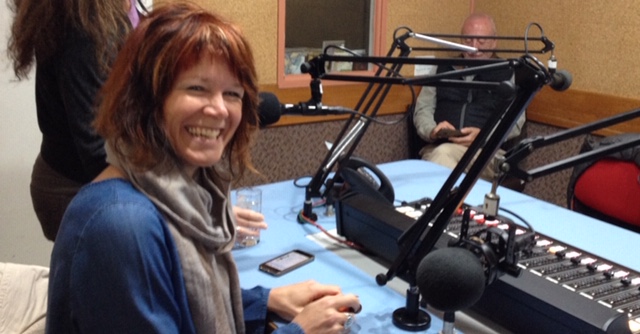
For our reflections on this year and what we hope to work towards over the next four years, listen to our interview on Mad Village.

mad village

Coming up in Melbourne: creative and visual events of interest to our network

Of particular interest to everyone who enjoyed the Free Theatre performance of ‘South Sudan Voice at our last co-hosted event last month: Free Theatre is now runningĀ  workshops over summer. The workshops include training inĀ four of Free Theatre’s applied theatre techniques – Image Theatre, Mapping, Dialogue Theatre, and The Art of Peace.Ā 

You can find out more details about the workshops here.

And for everyone interested in photography, justice, advocacy and social change, Richard Ross is presenting his photographic and advocacy work ,Ā  ‘Juveniles and Justice’. The workĀ explores the US justice system, and ways in which he has been able to effect change in the lives of young people in prison.

Presented by RMIT University School of Art, Photography, CAST (Contemporary Art & Social Transformation) and the Social Change Research Platform, this isĀ  free event on 29 November. You can find more detailsĀ here.


Be part of #ANZSOC2018-Young people, crime and justice

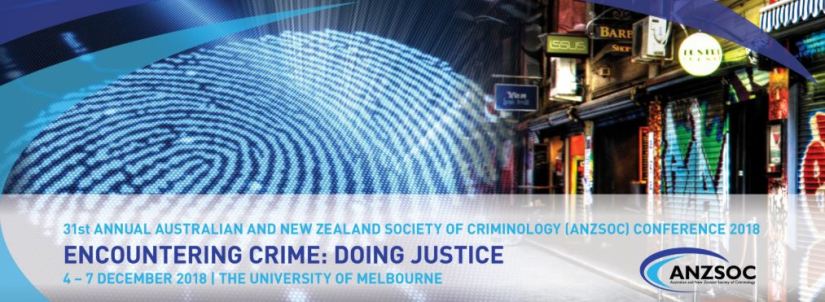
The @UniMelb criminology teamĀ is hosting the annual ANZSOC criminology conference in Melbourne from 4 to 7 December.

The programĀ has a wide range of sessions, roundtables and collaborative conversations on different conference streams and it includes youth justice. Topics covered under this stream include children in state care, working and communicating with young people, crime and justice, policing and reducing reoffending.

Capture

The conference also includes a roundtable discussion:Ā Policing the crisis? African youth, crime, media and policing in Melbourne Ā . It aims to ‘open for critical discussion a series of urgent and practical concerns that threaten community peace and cohesion’. The panel includes our co-convenor Diana Johns.

A highlight is the conference launch of the Koorie Youth Council’sĀ Ngaga-dji projectĀ Ā whichĀ voices the experiences of Aboriginal and Torres Strait Islander children in Victoria’s youth justice system.

We hope to see some of you there.

We will also be live tweeting from the conference and you can follow the discussion on Twitter at #ANZSOC2018.


JSS guest blog: how can we show Victorian children that they are always #WorthaSecondChance?

This week’s guest blog is by Elle Jackson from Jesuit Social Services where she’s the campaign manager for youth justice.

Our JYP network is a proud supporter of theĀ #WorthaSecondChance campaign which is fixing youth justice in Victoria.

wasc 2

Imagine this:

You’re 11 years old. When you grow up, you want to be a firefighter. Your favourite animal is a giraffe and your favourite hobby is basketball. Ā Your brain is still growing and developing but you are learning new things every day, through play, conversation and by making mistakes. You still don’t really understand what is exactly right and what is exactly wrong.

You’ve just started grade five at primary school. You love playing with your friends at lunchtime and your favourite thing to do at school is sport. When you feel scared or upset, your mum or dad comforts you, often by giving you a hug, even if you’re being told off for something.

Now imagine this, the same scenario with some key differences:

You’re meant to be starting grade five but instead you’re in custody at a Youth Justice Centre. You’re in custody with kids older than you that have been there before so you are hearing a lot about the different reasons why other kids are there. You feel scared at night when you are locked in your cell but you practice the alphabet to help you go to sleep.

Based on recent reports by both the Commission for Children and Young People and the Victorian Auditor General’s officeĀ while you’re in custody you are likely:

  • To experience the regular use of isolation and lockdowns
  • Whilst in isolation, you’ll be denied access to education, fresh air and programs conducive to rehabilitation
  • You are likely to have no case plan during your sentence that identifies your goals, particularly around education, and ways to help you achieve these to help you reintegrate into the community
  • To received limited, if any, support focused specifically on rehabilitation

The reason you are in custody when you should be at primary school is because in Victoria, the age of criminal responsibility is 10 years old. This is despite extensive research demonstrating that children this age are still in crucial stages of brain development. Research also tells us the younger a child is incarcerated, the more likely they are to live a life involving entrenched offending, often persisting long into adulthood. We also know this overwhelmingly impacts Aboriginal and Torres Strait Islander children – who are 13 times more likely to be incarcerated than non-Aboriginal children in Victoria.

As a society, we need to recognise that if a child below the age of 14 is coming into contact with the police and getting into trouble, it is a child in crisis. We need to ensure we are providing the highest quality support to these young people, utilising a ā€˜wrap around’ support model to engage with parents, siblings and specialised services.

We need to see services, such as the Navigator program that works with young people aged 12 to 17 at risk of disengaging from education, have their age for eligibility lowered to the age of 10, as 12 is often too late. We need to intervene early in the lives of children and young people at the first sign that something may be wrong to keep them connected to school and the broader community.

We need to show Victorian children that they are always worth a second chance.

We can do that by raising the age of criminal responsibility from 10 years of age to 14, by lowering the age for eligibility for vital programs such as Navigator from the age of 12 years of age to 10 and by providing high quality, culturally appropriate support to families at risk.

This is why at Jesuit Social Services, we launched the #WorthaSecondChance campaign in July this year. We launched this campaign because Victorian children deserve more. This campaign is dedicated to expanding community understanding of how an evidence based youth justice system will be the safest option for everyone.

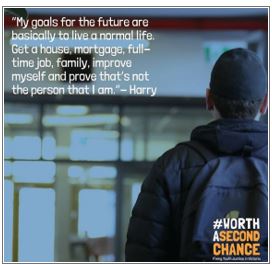
We need to remember children at risk of interaction with the justice system want the same things we do from life – take this quote from Harry, a young person who has participated in our campaign, as an example:
wasc image

As a community, we need to ask ourselves do we want that 11 year old to pursue his dreams to become a firefighter or do we want our system to enable him to graduate to an adult prison? We know what our answer is.

Sign up here to our campaign or contact me at elle.jackson@jss.org.au to find out how to get involved.

Elle Jackson

Jesuit Social Services



Connecting young leaders at Voices for Justice

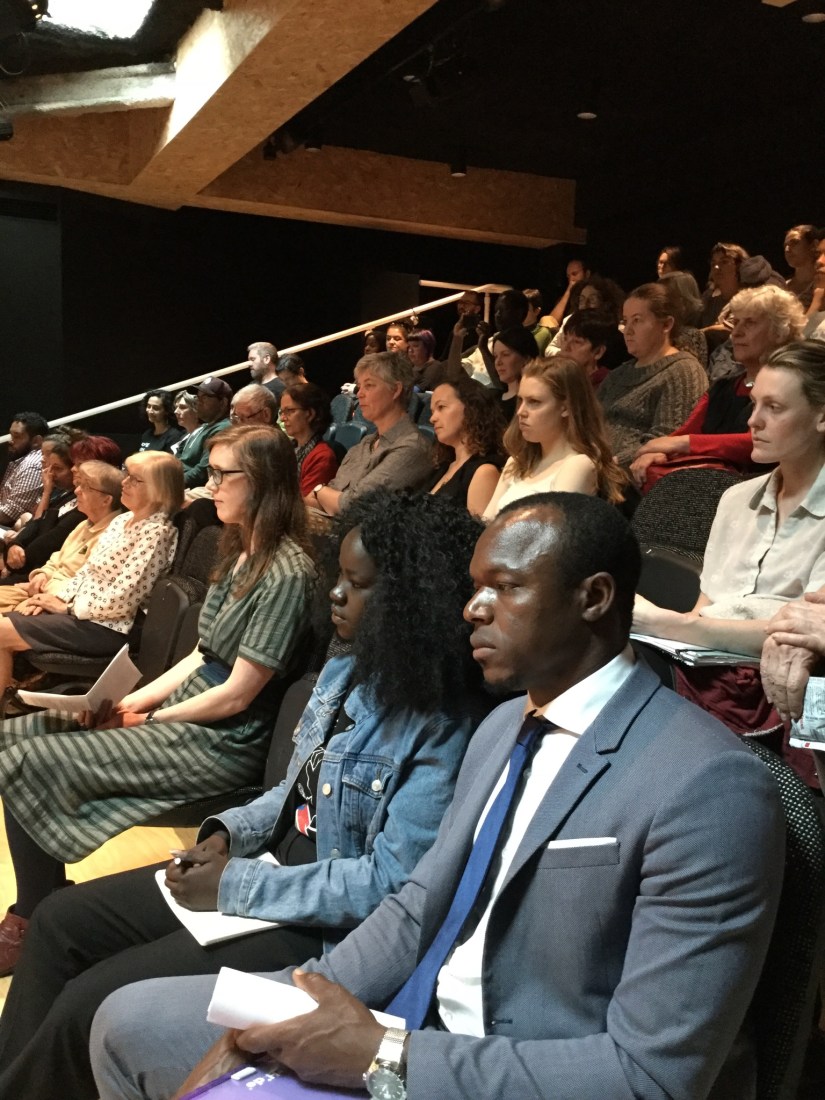
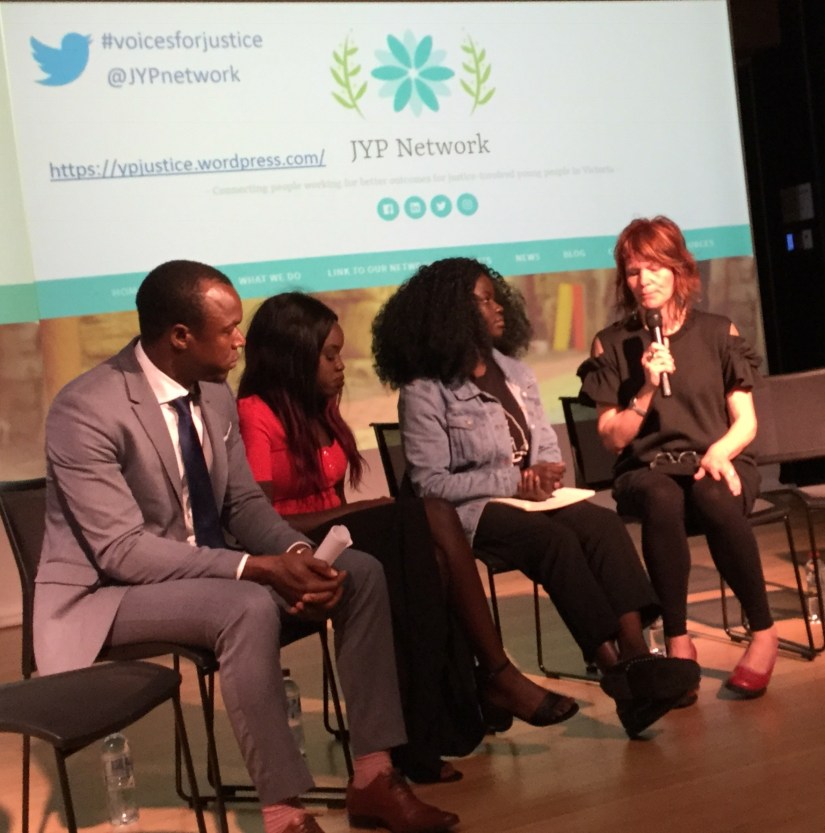
Our network –Ā together with the School of Social & Political Science’sĀ Conflict, Development & Justice Research ClusterĀ at the University of Melbourne and the Koorie Youth Council, co-hosted an event,Ā ‘Voices for Justice, Stories for Change: Learning from First Nations and Communities of Colour’ – at Melbourne on ThursdayĀ 25 October 2018.

EB1DE153-8916-4B0D-9EF2-EE043591E265

It showcased important work byĀ the Koorie Youth Council and Free Theatre.

Features included a panel of Indigenous voices discussing the KYC’sĀ Ngaga-dji (‘hear me’)Ā report,Ā a panel of young African-Australians talking about their experiences of ‘justice’ and –Ā following this exchange of stories andĀ perspectives – a Free TheatreĀ performance ofĀ ‘South Sudan Voice’.

111A17E9-6CCC-46D5-A06D-DD9D2FEF124F

The event was covered by SBS on national TV onĀ SBS News.

We look forward to continuing this important conversation at future events.