How should we think about and respond to youth crime?

This is a guest article by Dr Catia Malvaso, Professor Andrew Day, Professor Paul Delfabbro, Ms Louisa Hackett, Dr Jesse Cale and Professor Stuart Ross.

The authors have recently been awarded funding from the Australian Institute of Criminology to study how adverse childhood experiences and trauma relates to offending behaviour in the South Australian youth justice system:  Adverse childhood experiences and trauma among young people in the Youth Justice system: A South Australian study .


There are few areas of practice in the criminal justice arena quite so contentious as how to respond to young people who commit serious and/or repeated offenses. Recent events across the country, including media reports of youth crime in Werribee and Dandenong have reminded us about some of the concerns that many have about the safety of our communities but sit uncomfortably alongside the report of the Northern Territory Royal Commission into the Protection and Detention of Children which highlighted the difficulties associated with simply incarcerating young offenders.

Responsibility versus vulnerability

One of the most important determinants of our views about what should be considered as appropriate responses to young people who commit crimes is our beliefs about the degree of responsibility that young people have for their actions. Whereas some guidance in relation to matters of criminal responsibility can be found in the law (for example, in Australia there is a conditional legal presumption, doli incapax, that a child under the age of 14 or 15 is incapable of forming a guilty intention), allocating personal responsibility for criminal offences is far from simple when we consider the behaviour of those who are under the age of majority. There are those, for example, who regard young offenders as vulnerable young people who are ‘at risk’ of encountering a wide range of problems across different domains of life and, accordingly should be offered compassion and support. For others, however, there are issues of due process and the need to both punish those who break societal rules, deter others from behaving in similar ways, and to ensure that retribution is sought for victims of crime. Often these different views reflect ideological standpoints that have been formed independently of current research evidence.

How should we best understand issues of vulnerability in young offenders?

A useful starting point, in our view, is to consider evidence from longitudinal studies around Australia that demonstrates that children who have histories of child maltreatment are at a substantially increased risk for subsequent youth justice convictions and detention. Utilising linked administrative data from the child protection and youth justice systems in South Australia, our research into this issue demonstrated that although only 2% of children born between 1982 and 1997 who had contact with the child protection system ended up in detention for crimes they had been convicted of, almost 75% of young people who entered detention between 1995 and 2012 had a history of child protection contact. There is also a growing body of evidence from international research studies demonstrating that maltreatment is likely to co-occur with what are increasingly referred as Adverse Childhood Experiences which represent significant events in a young person’s life that can alter developmental pathways, including witnessing family violence, experiencing parental divorce, separation or death, and living with family members who have substance abuse problems, mental health issues, or who have been incarcerated. It is the cumulative impact of these experiences that is thought to lead to an increased risk of criminal behaviour among young people. Though the mechanisms by which this occurs are not yet well understood, it does raise questions about how the community should respond when the line between victim and offender is potentially blurred.

The rising popularity of “trauma-informed” approaches

Given the evidence that young people who commit crime have experienced high levels of adversity throughout their lives, professionals are now paying more attention to the role that trauma plays in the development of offending behaviour. As evidenced by the recommendations made by the NT Royal Commission, there is an expectation that youth justice systems manage the trauma-related needs of young offenders. As with any developing concept, there has been considerable debate around whether addressing trauma will reduce criminal behaviour. A particular issue in this debate is that not all young people who experience adversity will be ‘traumatised’ and not all individuals who experience trauma symptoms will offend. And yet our recent study which looked at the needs of young male offenders in detention in South Australia showed that 24 of the 28 young people interviewed endorsed at least one of the events listed on a childhood trauma questionnaire, with nearly three out of four rating these experiences as ‘extremely traumatic’ and potentially associated with other proximal risk factors for youth offending, such as poor anger regulation and antisocial thinking. There is also growing international evidence to suggest that unresolved trauma subsequently plays a role in ‘acting out’ behaviour, including aggression and violence, with researchers also identifying poor impulse control, anger regulation issues, and problematic alcohol use as mechanisms underlying the association between maltreatment and youth offending.

 

orange leaf on chainlink fence
Photo by Brett Sayles on Pexels.com

The challenge of diversity: one size won’t fit all

In the Australian context, the specific intergenerational impacts of adversity and trauma among Aboriginal and Torres Strait Islander young people, who are disproportionately represented in the justice system, must be carefully considered. Another group of particular interest is those who have had contact with the child protection system; especially those who have been placed into out-of-home care. These young people are likely to have experienced early onset, protracted, and repeated traumatic events, such as experiences of maltreatment and domestic violence and are disproportionately more likely than those without care histories to engage in chronic offending into early adulthood. Although young people often enter out-of-home care with difficulties in emotion-regulation, attention, activity level or aggression, all risk factors for criminal behaviour, there is evidence that flawed system processes leads to what has been term “care criminalisation”. This occurs when police are called to deal with behaviour that would normally be dealt with by parents in ordinary family homes. But will training out-of-home care staff in trauma-informed strategies to help manage difficult behaviours be enough to address this issue or is change required at a broader systems level?

Questions left unanswered: where to from here?

It is now time for us to think much more carefully about the causes of crimes perpetrated by children and young adults before we arrive at conclusions about what is the most appropriate response to youth crime. In particular, there are few interventions available in Australia to help young offenders address developmental trauma. Whilst the mental health sector has generally been more willing to acknowledge and work with issues relating to trauma in adolescence, any link between adverse childhood experience and offending behaviour and trauma is still viewed by some as offering young offenders a way to minimise responsibility for their behaviour. And yet, this is not sufficient grounds to avoid developing, implementing, and above all evaluating trauma-informed programs and service responses as a means to prevent both the initiation of criminal behaviour and subsequent pathways into chronic offending.

Improving the lives of young people: #RaiseTheAge to stop the damaging impact of prison

We stand with our with our friends at Smart Justice for Young People coalition in the call to the Victorian Government to raise the age of criminal responsibility to 14 years old.

This change would protect young people under 14 years from being imprisoned while on remand or through sentencing. By keeping young people out of prison they won’t be exposed to its psychologically damaging impact.

F5B3777D-0358-4A66-B217-F1F4DDAB919D
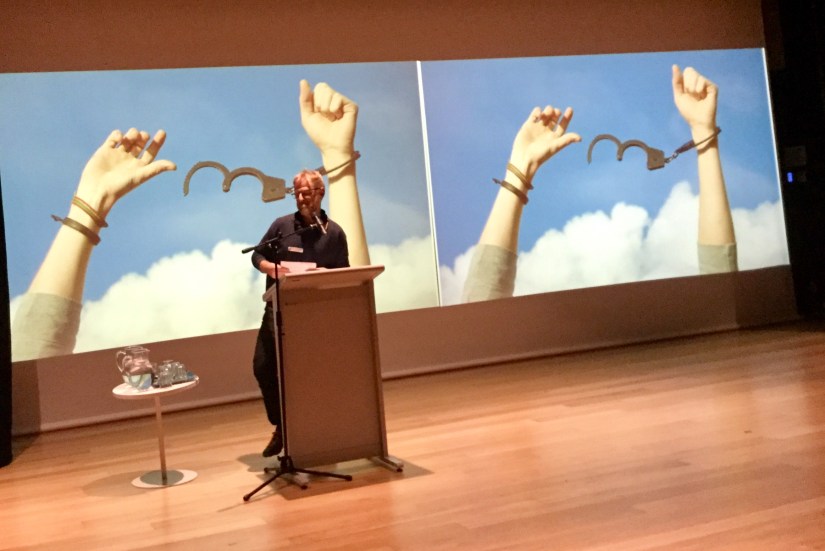
Dr Mick Creati, paediatrician,  at the launch of our network on why we need to raise the age 

The recent call for submissions to the Royal Commission into Victoria’s Mental Health System provided coalition partners with an opportunity to ask the Royal Commission, in its final report, to consider recommending to the Victorian Government that the law be amended to raise the age of criminal responsibility to 14 years.

While the Commission is still in the process of publishing these submissions on its website, we’ve provided you with the links to four relevant submissions here:

Jesuit Social Services

The Centre for Excellence in Child and Family Welfare

The Law Institute of Victoria

Comparative Youth Penality Project at UNSW

Did you or your organisation also provide a submission on this issue?

Leave us a comment below and include the link to the submission and we can share it here.


Justice lab study: how to move from punitive, large, remote youth detention centres

Moving Beyond Youth Prisons: Lessons from New York City’s Implementation of Close to Home (2019) Columbia University Justice Lab, Weissman, Ananthakrishnan, Schiraldi.

Wind back the clock to the mid-1990s where New York’s prison system shipped off about 3,800 young people every year to large, far off prison facilities where they were disconnected from family, friends and community.

However, now there are just a small number of young people who are placed in smaller, more home-like residential settings.

low section of man against sky
Photo by Pixabay on Pexels.com

How did this youth justice transformation happen?

This case study published by Columbia Justice Lab examines the reforms and changes at both the state and city level that brought about the transformation.

The study offers a roadmap for other jurisdictions to follow.

Some key points include:

  • use a crisis as an opportunity for change.
  • make the cost and current state of youth prisons visible to key political leaders.
  • include the voices of young people with lived experience of system in advocacy for change.

You can downoad the PDF of the Justice Lab case study here and follow the discussion on Twitter with the hashtag #BeyondYouthPrisons.

Coming up: events of interest to our network

orange leaf on chainlink fence
Photo by Brett Sayles on Pexels.com

Dr Tim Corcoran is giving a public lecture ‘Psychosocial justice for students in custody’ in Melbourne on 28 February 2019.

The presentation will discuss the project ‘Improving Educational Connection for Young People in Custody’ and  highlight research examining how education can be improved for young people in custody. The study was made in conjunction with project partner Parkville College.

More information here.

On the same date, the next Youth Research Centre seminar is being held.  ‘Over the wall: Imagining and enacting socially just pedagogy in Victorian Youth Justice Centres’ will be presented by Brigitte Rogan.

Details: 28 February  at 11 am at the Melbourne Graduate School of Education at the University of Melbourne, 234 Queensberry Street, Parkville.

Do you know of any other events coming up in Victoria that would be of interest to our network?

Share it with us by leaving some information about the event in comments below.

Thanks.


Local Time: Working towards small-scale local facilities for justice-involved young people

Our guest blog is by Dr Sanne Oostermeijer

9D7E7EA0-7B64-436E-A14F-C68DC16D82BA
Dr Sanne Oostermeijer presenting at our network launch in 2018

Research fellow at the School of Population and Global Health, University of Melbourne and co-creator of Local Time.

When the National Gallery of Victoria and VicHealth announced the inaugural Victorian Design Challenge (VDC) with the question: ‘How might we increase the resilience of today’s young people’, it seemed to be speaking directly to me about the state of youth justice in Victoria.

During 2017 I had moved to Melbourne, after working on a project in the Netherlands exploring new forms of youth justice, which included three pilot sites for small-scale local justice facilities. Each facility explored this concept in its own way, however all three shared particular key elements: they were small-scale (max. 8 young people); local, that is, in close proximity to the young person’s family and community; and were focussed on relational security and maintaining positive elements in the lives of the young people.

Working with its key stakeholders, including the young people within the facilities, was inspiring. Everyone within these spaces seemed to have one goal in heart and mind: how can we empower these young people to create and maintain positive changes in their lives?

The experience of seeing these facilities in operation left a deep impression; I had seen that such an evidence-based policy change was possible, and that it had positive effects on both the young people and people working in the field.

In the weeks after moving to Melbourne however, I saw a different approach being advocated by media and politicians; a ‘tough on crime’ approach. This was frustrating to me, since evidence is lacking for either the ‘youth crime problem’ or the effectiveness of such a punitive approach. This was the exact opposite of the positive changes I had seen and experienced in the Netherlands.

I felt this issue pressing upon me at the time the VDC was announced, seeking design ideas to increase resilience and wellbeing in young Victorians.

The current evidence on ‘what works’ in youth justice translates closely to the idea of ‘building resilience’, so with my partner Matt (who is an architectural graduate), I began to look at how resilience could be embedded through the design of facilities for justice-involved young people.

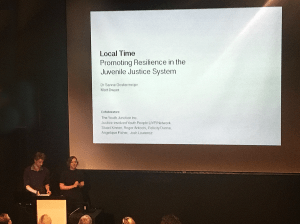
We presented our work in June 2018, proposing the development of a design standard for small-scale, semi-open, local facilities as an alternative to high-security detention. The design standard would detail explicitly how the architecture of a facility can promote prosocial resilience and wellbeing within the justice system, based upon international research and precedents.

Sanne Matt design photo
Sanne and Matt presenting at 2018 VDC

Our project, Local Time, was announced the winner of the 2018 VDC and we are now actively working towards changing the Justice system in Victoria.

Through its design, a youth justice facility embodies the ideas of the system which builds it. This in turn affects the way that services and programs can be provided within that space.


For example; if social connection is a key principle of rehabilitation, then the facility itself should be sited within or close to the youth’s community. Designing the facility on a site outside the community creates physical and psychological barriers to inclusion, and severely limits the young person’s ability to participate in the community in ways that build social connection.

We believe that we can take the first step to implementing a positive architectural model in the Victorian youth justice system by precisely articulating the key principles and requirements for small-scale local facilities, and that this can promote genuinely positive changes in the lives of justice-involved young people.

Ultimately, we hope our project will form one part of a broader reform based on the principles of justice reinvestment: re-allocating money from prisons towards communities – with a place-based, community-driven approach.

Our project proposal can be found here.

Dr Sanne Oostermeijer

Research fellow at the School of Population and Global Health, University of Melbourne and co-creator of Local Time.