Looking to NZ, USA, UK, Spain and Germany for ways to stop children and young people getting caught up in the criminal justice system

This is a guest blog by Laura Chipp, who has been awarded the Jack Brockhoff Foundation Churchill Fellowship for 2019.

I am about to embark on a huge piece of work, which no doubt will be close to the hearts of many colleagues in the youth justice/youth sectors, as it is mine. Recently I was formally awarded a Winston Churchill Fellowship for 2019. The project is on legislating and enhancing a conditional child ‘caution’ scheme in 2020. I will be undertaking this project in my capacity as a Churchill Fellow.

I am very excited about further researching this topic and finding best practice from across the world. I tried to choose locations which were most comparable to our census data, demographics and social issues here in Victoria.

I have researched and submitted to study:
1) New Zealand – Wellington, Auckland
2) Spain – Madrid
3) Germany – Berlin
4) England – Birmingham, London
5) USA – in the Deep South (Alabama, Missouri, Tennessee) as well as New Jersey, New York.

My Churchill Fellowship analyses different diversionary programs Police can engage with and refer a child to through Police cautions and diversionary programs, at their first contact. It would provide many tools, processes and programs which could be offered to children on a case-by-case basis, with the aim to refer them to participate in proven and relevant programs, tailored to their personal circumstances. This is all pre-charge and out of Court.

This project could be life-changing for the child; as they will be diverted away from Court and the youth justice system and hopefully in doing so it would have a significant impact on the child as they would not have a criminal record.

My Fellowship is finding best international practice and an evidence base for creating an optimum legislated, conditional cautioning scheme for children under 18 years. I will also search and hopefully discover other best practices and programs to reduce criminal justice entrenchment in the category of ‘emerging adults’ (18-20 year olds) and time permitting, even up to 24 years old.

I want to find multiple best international approaches to apply different tailored working interventions. The project will hopefully identify the best way to reduce reoffending and increase the chance of engagement of the young person, in a timely more manner.

Your experience and input is absolutely critical in this important topic. I would grateful if you could assist me also with any great contacts and organisations that you know in my study five locations above. Your help will likely result in me being in the right places, with the right people.

Any contacts or suggestions you have, who could assist in this area, that would be fantastic! Please email me directly at ‪Laura.chipp@hotmail.com.

I am also hosting a “Cross Agency Youth Caution Workshop” in Melbourne on Tuesday 19 November 2019.

If you have experience and interest in the youth justice sector and would like to be further involved in my fellowship, please email me any ideas or names to me directly at laura.chipp@hotmail.com, with the following details:

1) Your name; 2) Email address; 3) Phone number (preferably mobile); 4) Job role and or organisation; 5) Your experience in this topic.

Thank you all in anticipation!

Laura
laura chipp
Laura Chipp

Local Time: How to start talking to government about designing small-scale local YJ places

local time blurb.jpg

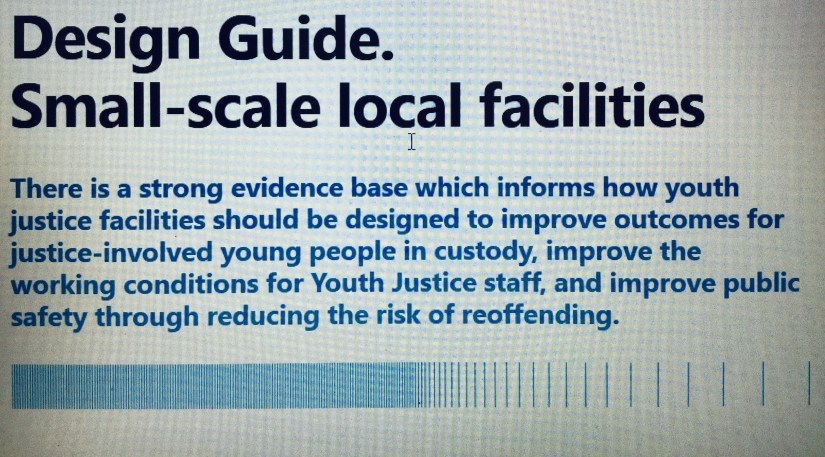
Award winning Local Time designers Dr Sanne Oostermeijer and Matthew Dwyer have published a guide to improve outcomes for justice-involved young people in Victoria.

The guide outlines a new architectural model for youth justice facilities in Victoria that are ‘small-scale, integrated in the local community, therapeutic and capable of differentiated security’.

The Design Guide acts as a starting point for discussions with your local stakeholders, community organisations and government.

Download the guide here.

sanne darwin.jpg
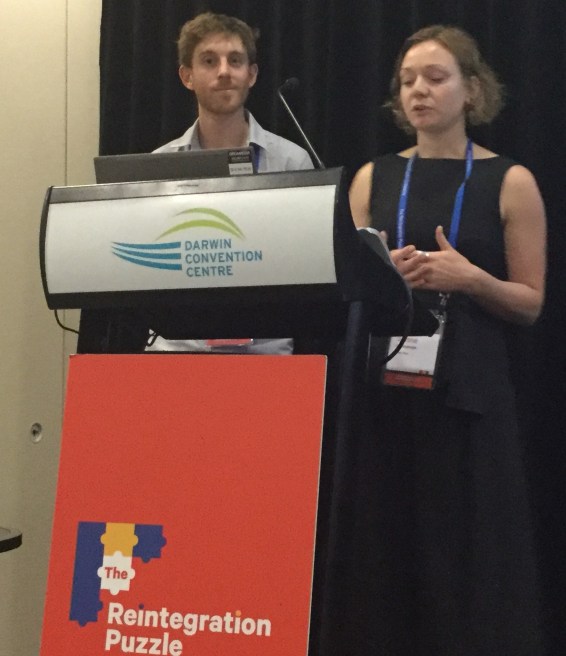
Sanne and Matt presenting Local Time at the Reintegration Puzzle Conference

Why our network is part of the call for better outcomes for young people in Victoria

We have an opportunity to return Victoria to its previous position as leading the country in humane, effective and evidence based approaches to young people in trouble in a way that holds them truly accountable for their actions, gives them hope to transform their lives, stops children progressing to a life of adult crime and reduces the number of future victims. [..]

Addressing the drivers of offending is the best way to build stronger communities. We believe more needs to be done in order to effectively reduce the trauma, discrimination and inequality that leads some children and young people to get in trouble [..]

Last week, our network endorsed a joint statement along with 17 other signatories, which was emailed to Minister Ben Carroll Minister for Crime Prevention, Corrections, Youth Justice and Victim Support and David Southwick MP (Shadow Minister for Police; Community Safety; and Corrections).

In part it reads:

‘As experts with deep experience seeking solutions and working with people intersecting with the justice system, as well as their families and communities, we call on the Victorian Government to adopt and put into action the following key principles for an effective and humane youth justice system:

  • Incarceration as a last resort, including raising the age of criminal responsibility to 14 years of age
  • Focus on early intervention and diversion
  • Listening to the voices of people and their families
  • Developmentally appropriate approaches to children and young people
  • Addressing the disproportionate number of children and young people with a care experience who get caught up in youth justice and detention
  • Recognising the importance of culture and country for Aboriginal and Torres Strait Islander peoples
  • Connection to families, communities and culture
  • Thorough assessment and planning
  • Addressing offending behaviour
  • Addressing mental health, substance abuse and other health and wellbeing needs
  • Strong framework of support and accountability
  • Restorative justice approaches
  • Education and training focus that builds practical and social skills for re-socialisation, and builds skills for future employment opportunities
  • Holistic and appropriate wrap-around support services are available for those exiting youth detention in order to assist their reintegration into the community.’

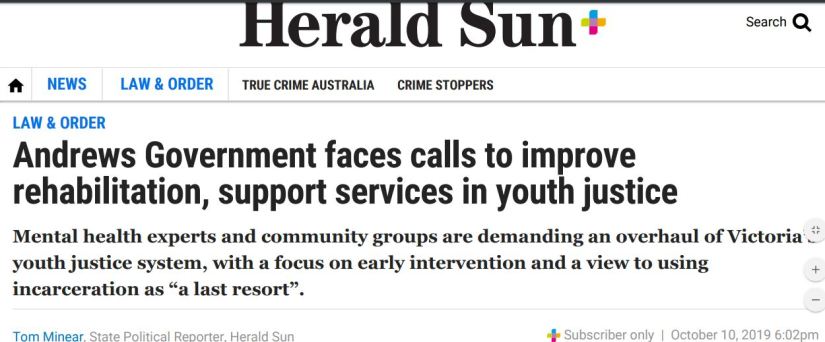
You can read more about the joint statement in today’s Herald Sun here. (paywall)

Read the full joint statement here.

Do you support the statement? What do you think should be priority principles? Is there any other principle you think we need to include?

We welcome your views in our comments section below.

Capture 11 oct hun

How we can keep justice-involved young people connected to their local communities?

B4C3203E-ED5B-48D2-B37D-7C5DA8B078C4
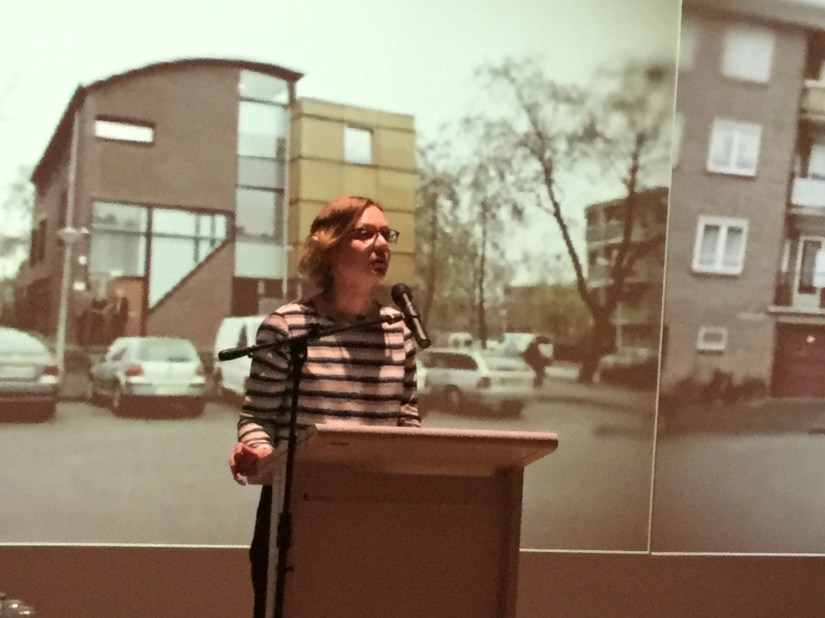
Sanne Oostermeijer speaking at our network launch in 2018.

Watch this inspiring short film from the Netherlands. See how the Ministry of Justice and Security is helping young people return to their local communities, connect with school and family, with small scale regional facilities designed to fit around a young person’s life.

We believe this model is a better option for Victoria because a large scale youth prison, located in a remote place, disconnects young people from their community, support, family and their local schools.

You can read more about this project from our advisory group member, Dr Sanne Oostermeijer, co-creator of Local Time, here.

A positive step for youth justice in Victoria?

Announced on Friday’s public holiday in Victoria, was the decision by Minister for Corrections and Youth Justice, Ben Carroll to modify the design of the Youth Super Max jail for young people at Cherry Creek,  located 11 km away from Werribee train station.

The decision was informed ‘by international best practice, feedback from independent experts including the Youth Justice Custodial Facilities Working Group, and recommendations from the Armytage/Ogloff and Neil Comrie AO reviews’.

According to the media release, the jail will include 140 beds for 15 to 18 year olds and will be ‘master planned’ for up to 244 beds’. This in in contrast to the original facility plan published in July 2019, which was ‘master planned for up to 300 beds’.

Jesuit Social Services chief executive Julie Edwards referred to the decision as a ‘step in the right direction’:

We know that large-scale detention facilities do not serve the purpose of rehabilitating and re-socialising young people ahead of their return to the community. This has been proven in jurisdictions around the world.

Today, Commissioner for Children and Young People, Liana Buchanan told 3AW’s Neil Mitchell that she welcomes the announcement:

“They’ve listened to the advice of experts, and ultimately they’re going to do what’s better for the children and young people in there, for their prospects of rehabilitation, and ultimately for community safety’.

“If you have a facility where you can separate out kids, where you can have them accommodated in smaller units and you can actually make sure that you’re delivering the services that those kids need to help them change, surely that’s got to be better,” she said.

87FA06AA-37EF-4A71-9E45-DA7252E0F83D
Peter Norden speaking at our network launch in 2018, calling for a re-purposing of Cherry Creek.


What are your views on the decision?

Leave your comments below.